


Every December, markets get noisy in a very specific way: thinner liquidity, louder narratives, more “I heard” and less “I know.” And strangely, this is exactly when a cat-like operating system becomes most valuable.
Cats don’t look busy. They look selective. They conserve energy, ignore irrelevant signals, and move only when the odds improve. In trading, that’s not a personality trait — it’s survival math.
Below are five reasons cats would make better traders than most humans — and why each one is a real investing edge dressed up as a joke.
1) Multi-screen awareness, single-target focus
A cat can “run six screens” without looking scattered: the window for birds, the hallway for footsteps, the kitchen for snack sounds — and still lock onto the highest-priority target instantly. It’s not multitasking; it’s hierarchical attention. Most humans do the opposite: they bounce between feeds, charts, group chats, and headlines, mistaking motion for progress.
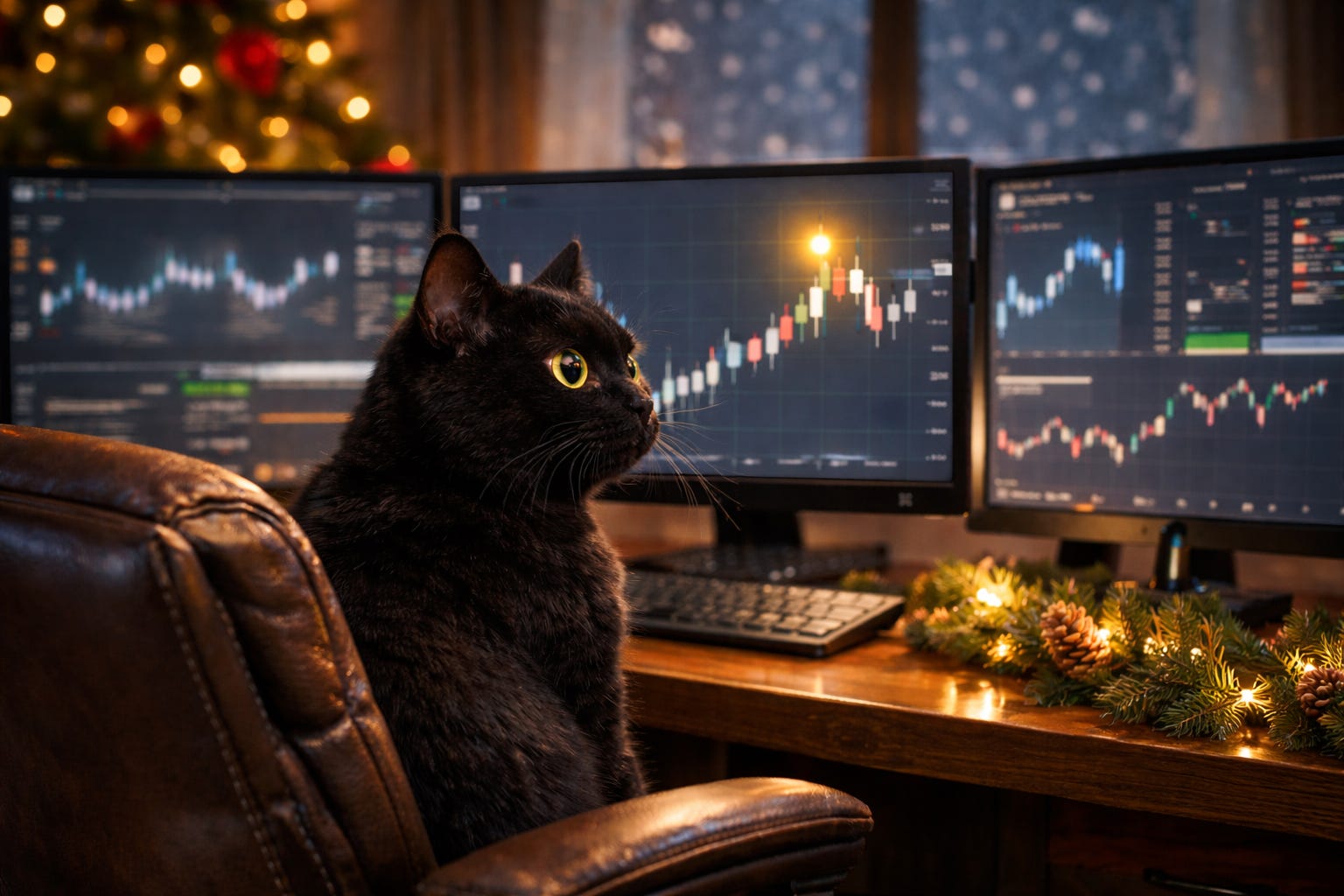
For an investor, focus is alpha because attention is a scarce resource. Every unnecessary switch increases the chance you miss the one thing that matters: the line in guidance that changes the model, the auction result that shifts rates, the flow signal that front-runs price. The edge often isn’t “more info” — it’s less noise, faster recognition, and the discipline to keep your decision loop clean.
2) Stop-loss is written in the DNA
A paw touches something hot once. Immediate retreat. No bargaining. No storytelling. No “maybe it cools down.” A cat doesn’t negotiate with physics — it updates behavior. Humans, on the other hand, treat stops like emotional suggestions: “I’ll give it a little room,” “let’s see one more candle,” “it’s oversold,” “it’ll mean-revert.”
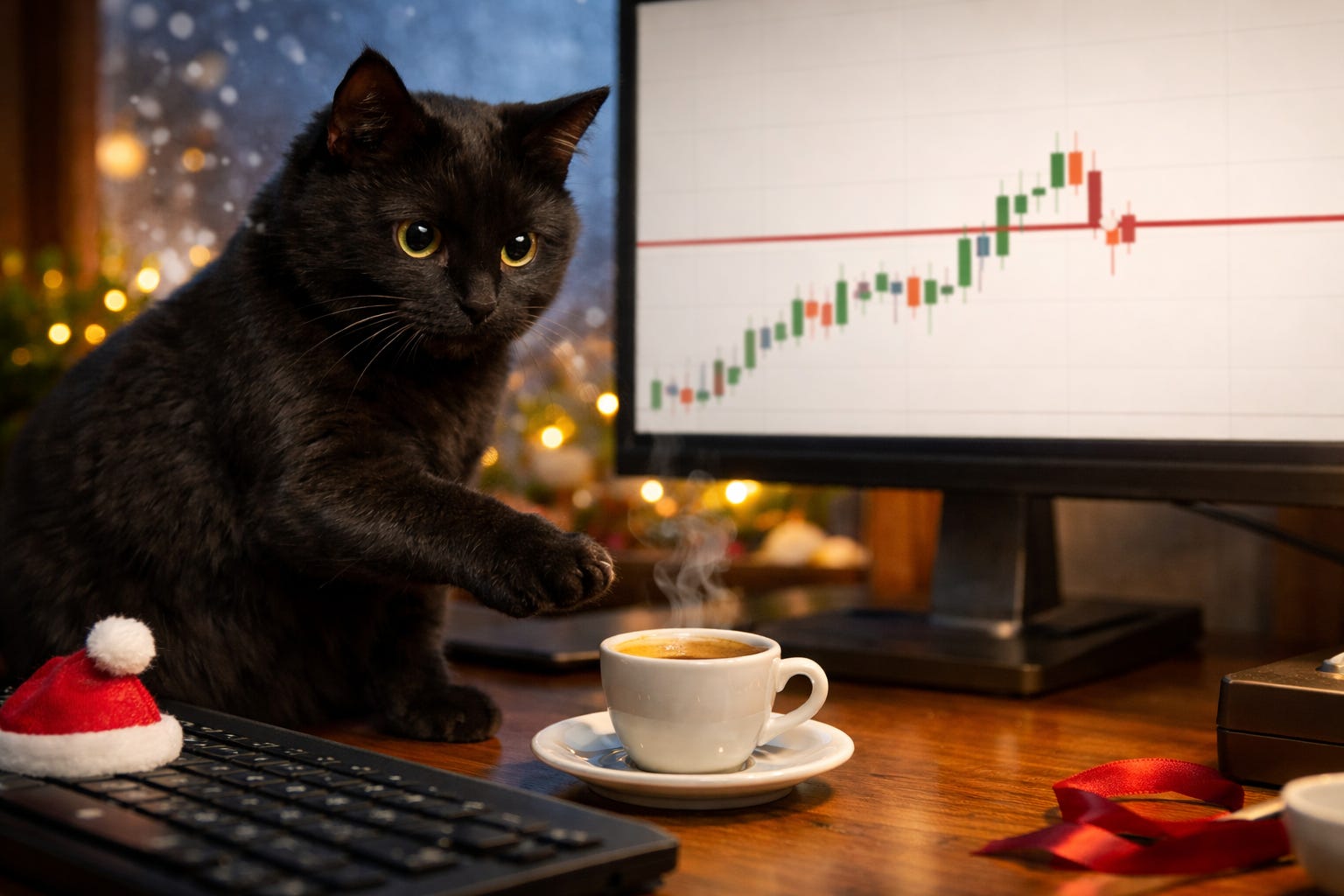
Stops matter because they protect your future decision-making. The biggest cost of a bad position isn’t the loss — it’s the mental bandwidth it hijacks: you start managing your feelings instead of managing risk. A clean stop-loss policy turns volatility into information, not trauma. It’s how you stay liquid — financially and psychologically — long enough to catch the trades that actually pay.
3) Cross-market instinct (and zero ego about it)
Cats learn correlations quickly: a faint sound in one room predicts movement in another. They don’t need a thesis deck to accept a linkage. In markets, cross-asset is the same: rates, FX, energy, and credit often move first, while equity narratives arrive later wearing a costume.
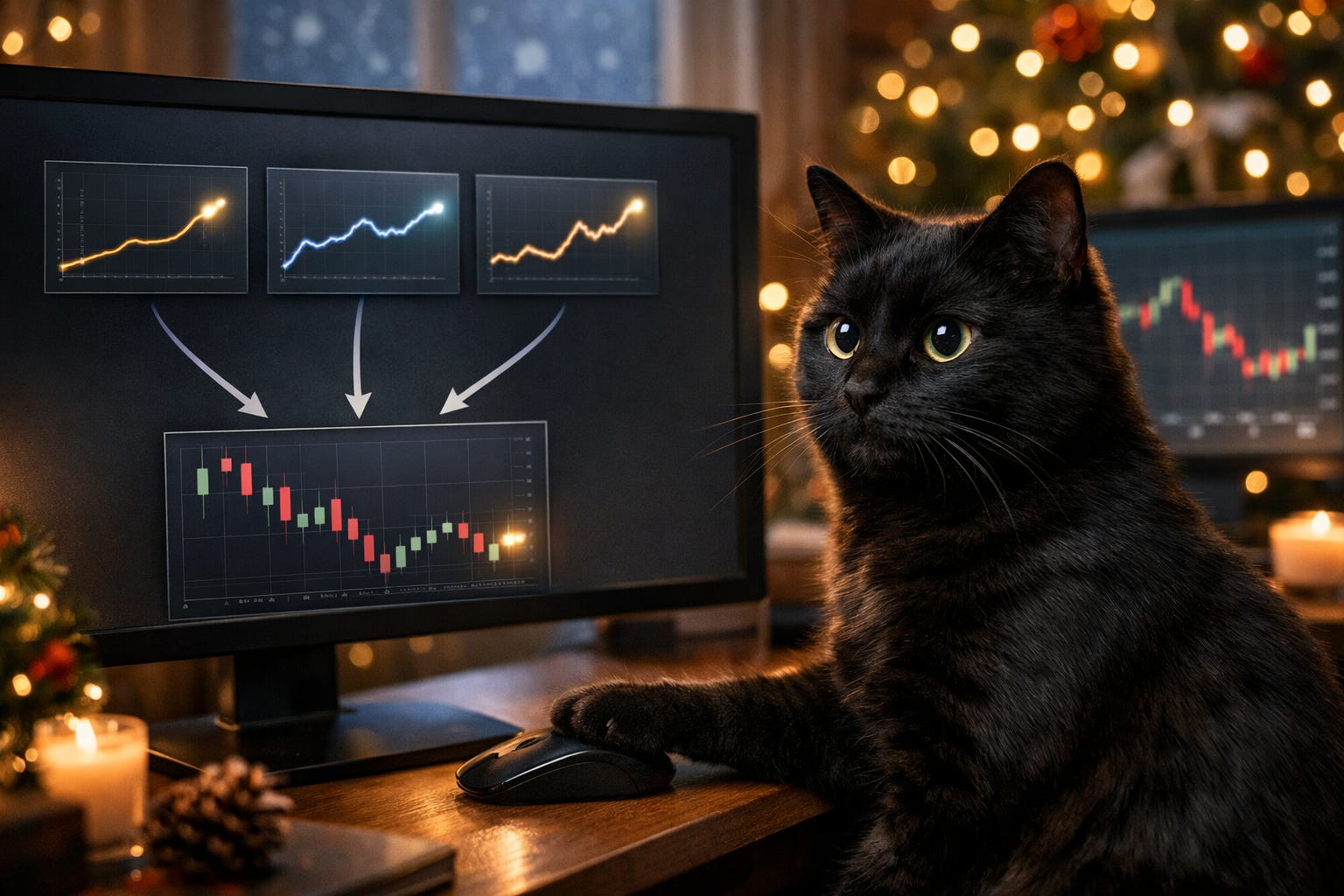
This matters because investors who only watch one market are constantly reacting. The best risk-takers are usually inter-market translators: they know when a dollar spike is really a liquidity story, when oil isn’t about oil but geopolitics + positioning, when a bond selloff is a growth reprice vs an inflation reprice. Cross-market awareness doesn’t mean trading everything — it means knowing what’s driving the thing you trade, so you don’t get blindsided by the “other screen.”
4) Position management as an art: no all-in jumps
When a cat jumps, it doesn’t bet its entire body on a single landing point. It finds angles, keeps optionality, and leaves itself more than one way out. Humans love the opposite: concentrated conviction, oversized positions, and a fragile narrative that must be right immediately.
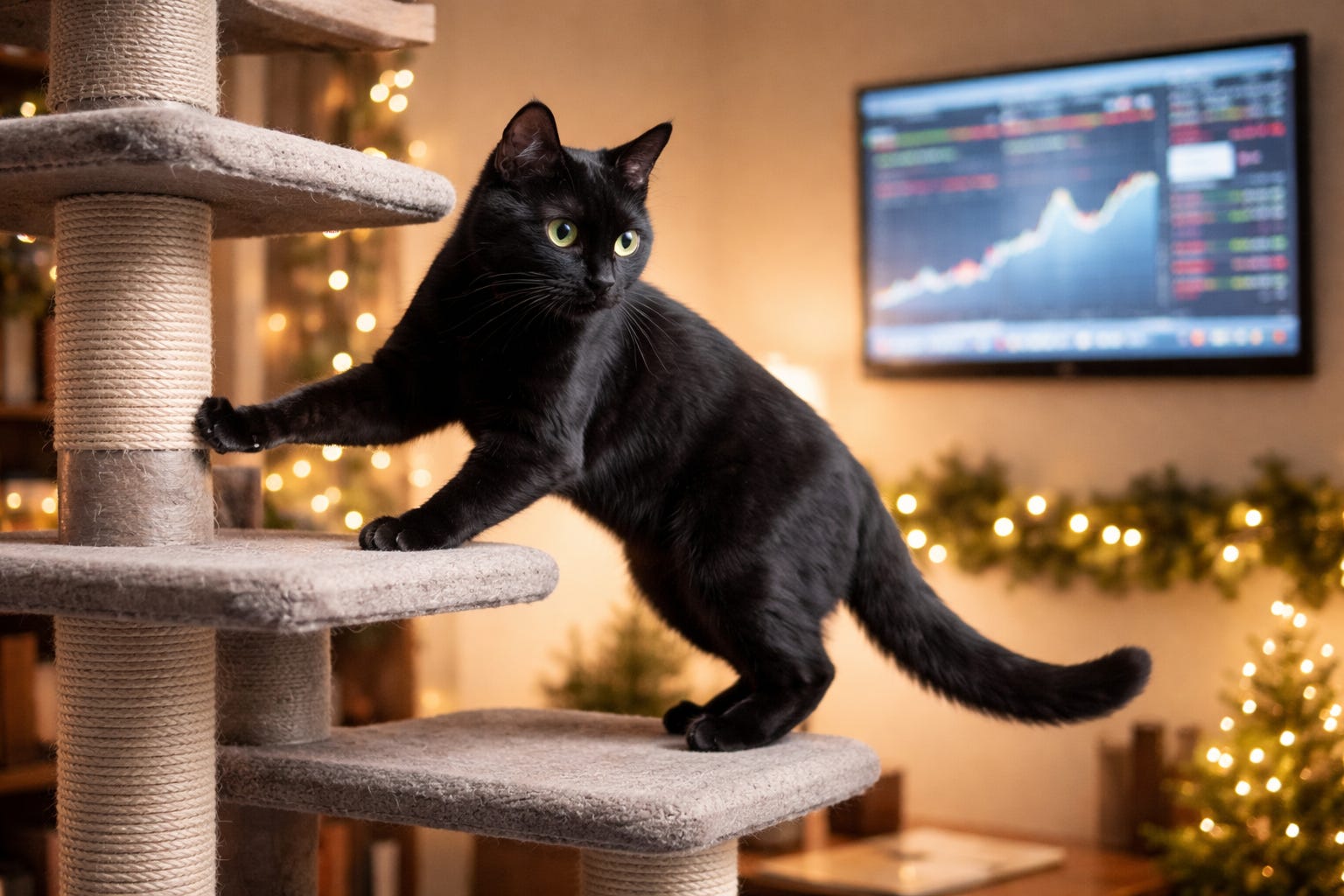
Sizing is underrated because it’s not exciting — but it’s the difference between a drawdown you can recover from and one that changes your identity. Good position management gives you time. Time to let the thesis play out, time to add when information improves, time to be wrong without being forced out at the bottom. The market doesn’t just test your idea; it tests your ability to survive variance. “Buffer” and “fallbacks” aren’t risk jargon — they’re how you stay in the game.
5) Emotional insulation: calm under non-core noise
A vacuum is roaring. A door slams. The world is chaotic. The cat keeps grooming. That is elite behavior. Traders aren’t paid to be emotional — they’re paid to be accurate under stress. And in modern markets, noise is not an exception; it’s the background condition.
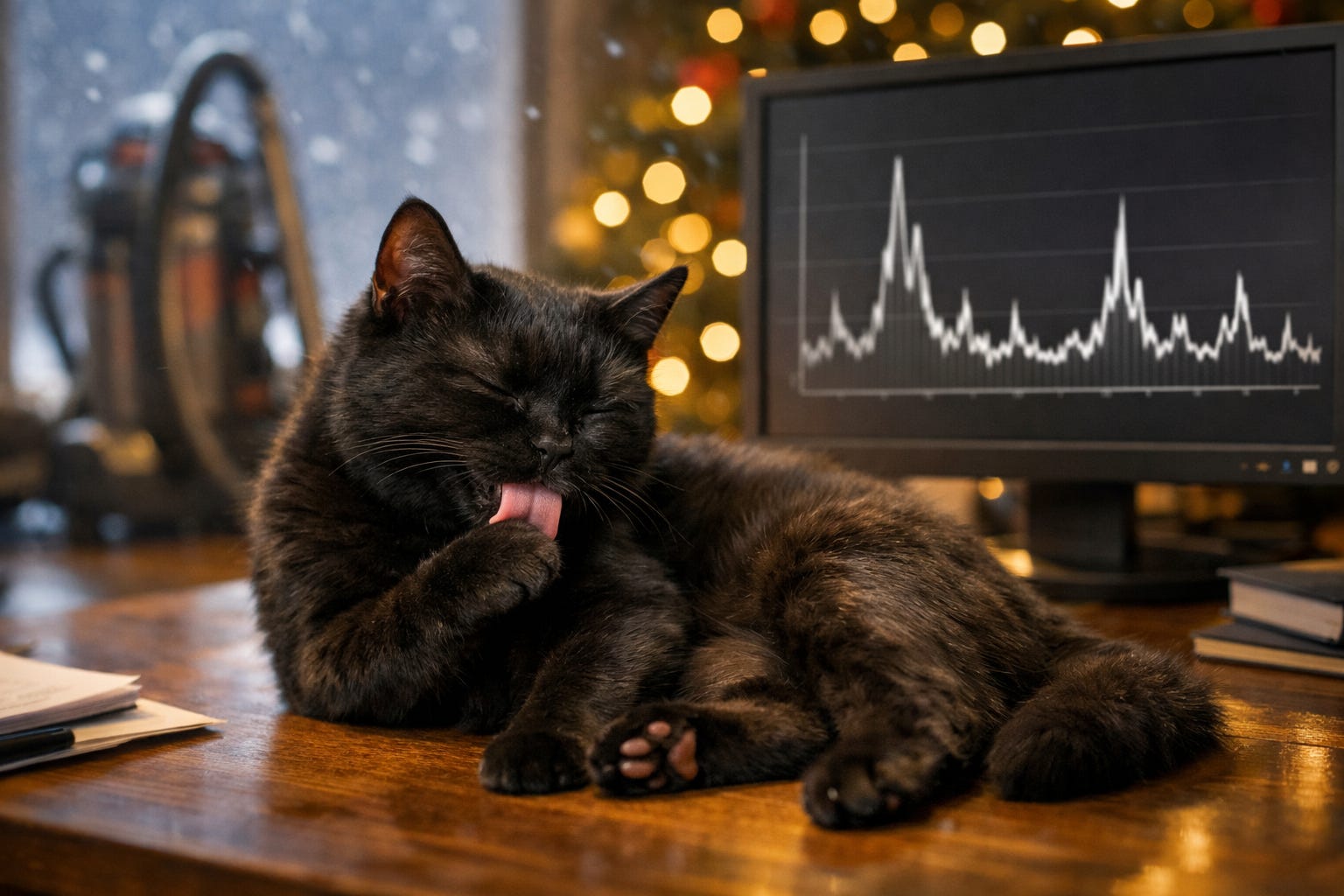
Emotional insulation matters because most investing mistakes are not analytical failures — they’re state failures. Overtrading, revenge trading, panic selling, chasing breakouts you don’t understand, doom-scrolling into paralysis. The goal isn’t to feel nothing; it’s to make sure your feelings don’t get voting rights in your portfolio. A cat doesn’t need to prove it’s right. It just stays stable until it’s time to move.
The brutal truth: cats don’t need social validation
Cats don’t “check the timeline” to see if other cats agree. They don’t outsource conviction to the crowd. They can operate alone without turning that into loneliness. And that’s the uncomfortable parallel: great investing often requires being early, being unpopular, and being patient while the market debates narratives.
The foundation of top-tier trading is not a secret indicator. It’s a temperament stack: deep focus, emotional distance, comfort with solitude, and low sensitivity to outside interference. Cats come with it pre-installed. Humans have to build it — deliberately.
Merry Christmas from PickAlpha.
The point isn’t that cats are “better” traders—it’s that their defaults map cleanly to what actually compounds: selective attention, non-negotiable risk limits, cross-asset awareness, position sizing that survives variance, and emotional stability under noise. In a market built to distract you, those are not soft skills; they are the core risk controls that keep you solvent long enough to capture real opportunity.